
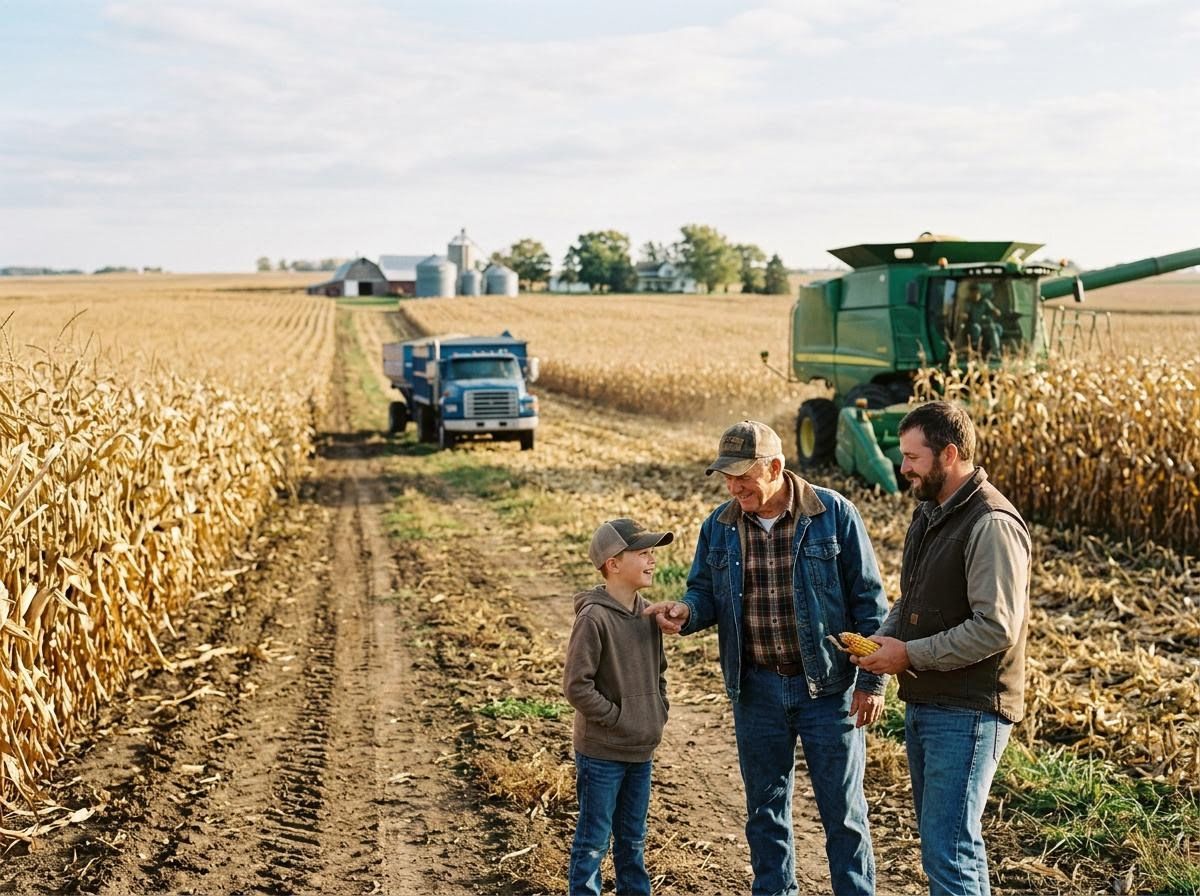
For many Central Illinois families, farmland represents years of work, a source of retirement income, and something they hope to pass to the next generation. The possibility of needing nursing home care raises a difficult question: Will the farm have to be sold to pay for care?
Advance Medicaid planning may help preserve farmland, but the result depends on more than signing a trust and waiting five years. The plan must address access to the property, rental income, and the tax consequences for the family.
Is Farmland Automatically Protected?
Farmland is not automatically exempt from Illinois Medicaid eligibility rules simply because it produces income or has been in the family for generations. Illinois provides a limited exemption for qualifying income-producing property, but that exemption generally does not protect the full value of a substantial farm.
A family may therefore own valuable land while having relatively little cash available for care. The residence and surrounding property also require their own analysis. Families should not assume that an exemption for the home protects every acre they own.
How an Irrevocable Trust May Help
A properly drafted irrevocable trust may allow farmland to be held for children or other beneficiaries while limiting the owner’s access to the property. After the applicable Medicaid transfer lookback has passed, the principal may be excluded from the owner’s available resources.
The word “irrevocable” does not guarantee that result. If the trustee can distribute principal to the owner or use it for the owner’s benefit, that portion may remain available for Medicaid purposes. Waiting five years does not cure a trust that continues to permit access to principal.
An ordinary revocable living trust generally does not provide this protection because the owner can revoke the trust and recover the property.
What Does the Five-Year Lookback Mean?
When someone applies for long term care Medicaid, transfers during the applicable 60-month lookback are reviewed. Giving away property or transferring it to a trust for less than fair market value can create a period during which Medicaid will not pay for covered care, unless an exception applies.
The five years is a lookback period, not an automatic five-year penalty. The amount transferred and the applicable rules determine the penalty.
Timing also involves more than the date the trust is signed. The farm must actually be transferred, and access to the transferred interest must be restricted appropriately. Creating a trust today and conveying the farmland several years later does not start the farmland’s transfer clock today.
Families also need a realistic plan for living expenses and care during the lookback.
Can the Owner Still Receive Farm Rent?
Some trusts preserve the owner’s right to rental income while prohibiting distributions of principal. This can allow the owner to continue receiving income without retaining access to the underlying land value.
For example, a trust might hold a $1 million farm producing $30,000 annually in net rent. The planning objective may be to preserve the farm for the children while allowing the owner to receive the rent.
However, that income remains relevant to Medicaid. If the owner later receives Medicaid nursing home benefits, available income generally contributes toward care after applicable deductions and allowances. Different rules apply when a spouse remains at home.
Other arrangements may exclude the owner from receiving both principal and income. That choice requires sufficient resources outside the trust. An owner also should not assume that retained rent can later be redirected to the children without transfer consequences.
Does Transferring the Farm Require a Gift Tax Return?
Often, a substantial transfer that constitutes a completed gift requires the owner to file a federal gift tax return. Filing a return does not necessarily mean gift tax is payable. Available lifetime exemption may cover the taxable gift.
Some irrevocable trusts retain carefully limited powers that make the transfer incomplete for federal gift tax purposes. The trust’s terms determine the result.
Medicaid and gift tax rules also operate differently. A transfer can have Medicaid consequences even if it is not a completed gift for federal gift tax purposes. Likewise, the annual gift tax exclusion does not make a gift exempt from Medicaid’s transfer rules.
What Happens to the Farm’s Tax Basis at Death?
Basis is generally the starting point for determining taxable gain when property is sold. For farmland purchased many years ago, the difference between basis and current value can be substantial.
Assume a farm has a $150,000 adjusted basis and is worth $1 million at the owner’s death. If the property qualifies for a basis adjustment to its value at death, a sale shortly afterward for $1 million would generally produce little or no capital gain. Without that adjustment, the built-in gain could be approximately $850,000 before selling expenses and other adjustments.
A trust can sometimes be structured so the farm is unavailable principal for Medicaid purposes while remaining included in the owner’s gross estate for estate tax purposes. Retaining a lifetime income right or certain carefully limited powers may accomplish estate inclusion and preserve the basis adjustment.
Estate tax does not actually have to be owed for the usual basis adjustment to apply. However, inclusion can create estate tax exposure, particularly under Illinois law. Simply calling the arrangement a “grantor trust” does not guarantee a basis adjustment.
Start Planning Before Care Becomes Urgent
The right arrangement depends on the owner’s health, income needs, other assets, tax basis, and plans for the farm. A trust should also fit the family’s leases, ownership arrangements, and broader estate plan.
At Black, Black & Brown, we help Central Illinois families coordinate estate planning, real estate, and tax considerations. If you own farmland and want to understand your options for future long term care, contact our Washington office at 309-444-3108 to schedule a consultation.
This article provides general information and is not legal or tax advice. The appropriate strategy depends on your circumstances and the law in effect when planning is undertaken.